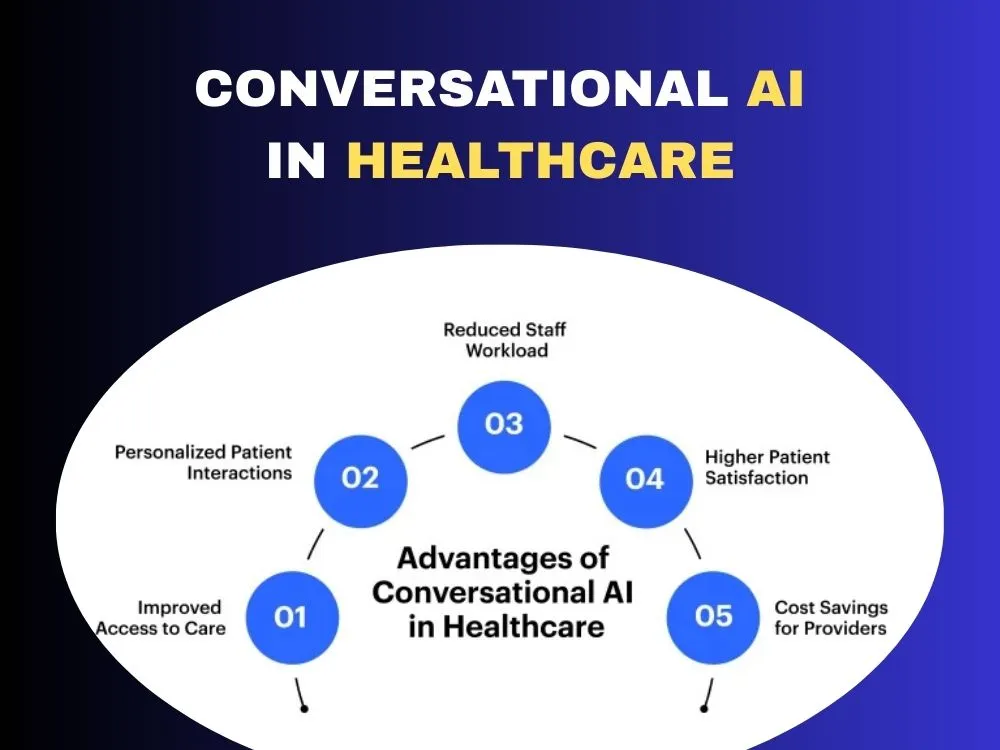
Conversational AI in Healthcare: Transforming Patient Care with Smart Technology
Conversational AI in healthcare refers to the use of AI-powered chatbots and virtual assistants to interact with patients, doctors, and healthcare staff. These systems help in tasks such as answering health-related questions, booking appointments, providing medication reminders, and supporting patient care through automated communication.
Conversational AI is a technology that enables computers and software systems to communicate with humans using natural language through text or voice. It uses Artificial Intelligence (AI), Natural Language Processing (NLP), and Machine Learning (ML) to understand user queries and provide intelligent, human-like responses.
Conversational AI is becoming increasingly important in modern healthcare due to the rising demand for fast, accessible, and cost-effective medical services. It provides 24/7 patient support, reduces the workload of healthcare professionals, and improves patient engagement. With the growth of telemedicine and digital health platforms, conversational AI plays a key role in delivering efficient and personalized healthcare services, especially in remote and underserved areas.
What Is Conversational AI?
Conversational AI is a branch of artificial intelligence that enables machines to interact with humans through natural, human-like conversations using text or voice. It is designed to understand what users say, interpret their intent, and respond intelligently in real time. Conversational AI combines advanced technologies such as Artificial Intelligence (AI), Natural Language Processing (NLP), Machine Learning (ML), and speech recognition to make interactions smooth and meaningful.
At the core of conversational AI is Natural Language Processing, which helps systems understand human language, including words, sentences, and context. Machine learning allows these systems to learn from past conversations and improve their responses over time. Speech recognition and text-to-speech technologies further enable voice-based interactions, making conversational AI accessible through chatbots, virtual assistants, and voice assistants.
Conversational AI is widely used across various industries, including customer service, education, banking, and healthcare. It helps automate routine tasks, answer frequently asked questions, provide instant support, and enhance user engagement. Unlike traditional rule-based systems, conversational AI can handle complex queries, adapt to different communication styles, and offer personalized responses.
Overall, conversational AI plays a vital role in modern digital systems by improving efficiency, reducing human effort, and delivering faster, more convenient, and interactive user experiences.
How Conversational AI Works in Healthcare
Conversational AI in healthcare works by combining artificial intelligence technologies to understand patient queries and provide accurate, timely responses. The process begins when a patient interacts with the system through text or voice using a chatbot or virtual assistant. The input is first processed by Natural Language Processing (NLP), which analyzes the language, identifies keywords, and understands the user’s intent.
Next, the system uses Machine Learning algorithms and medical knowledge databases to process the information and determine the most appropriate response. If required, the conversational AI integrates with healthcare systems such as Electronic Health Records (EHRs), hospital management systems, or telemedicine platforms to access patient data securely. The AI generates a response, which may include medical guidance, appointment details, medication reminders, or instructions to consult a healthcare professional.
In more advanced systems, conversational AI can escalate complex cases to human doctors or nurses for further evaluation. The system continuously learns from interactions, improving its accuracy and effectiveness over time. By automating routine communication tasks, conversational AI helps improve patient engagement, reduce staff workload, and ensure faster access to healthcare services.
Applications of Conversational AI in Healthcare
Conversational AI is widely used in healthcare to improve patient care and streamline medical services. Some key applications are:
-
Appointment Scheduling – AI chatbots help patients book, reschedule, or cancel appointments easily without waiting for hospital staff.
-
Symptom Checking and Triage – Patients can describe their symptoms, and the AI provides basic guidance or suggests consulting a doctor.
-
Medication Reminders – Conversational AI sends alerts and reminders to ensure patients take medicines on time.
-
Patient Support and Queries – Chatbots answer common health-related questions, report status inquiries, and insurance-related doubts.
-
Mental Health Support – AI chatbots offer emotional support, stress management tips, and mental wellness guidance.
-
Remote Patient Monitoring – Conversational AI helps track patient health data and follow up with patients remotely.
-
Clinical Assistance – Doctors and nurses use AI assistants for documentation, accessing patient records, and reducing administrative work.
These applications make healthcare more accessible, efficient, and patient-centered.
Benefits of Conversational AI in Healthcare
Conversational AI offers several important benefits that improve the efficiency and quality of healthcare services:
- 24/7 Patient Support – Patients can get assistance anytime without waiting for hospital working hours.
- Reduced Workload for Healthcare Staff – Automates routine tasks like answering queries and appointment scheduling.
- Faster Response Time – Provides instant answers, improving patient satisfaction.
- Cost-Effective Healthcare – Reduces operational costs by minimizing manual effort.
- Improved Patient Engagement – Personalized reminders and follow-ups keep patients involved in their care.
- Better Accessibility – Helps people in remote or underserved areas access healthcare services easily.
- Efficient Data Management – Integrates with healthcare systems for accurate and organized patient data.
Overall, conversational AI enhances healthcare delivery by making it more efficient, accessible, and patient-friendly.
Future Scope of Conversational AI in Healthcare
The future of conversational AI in healthcare is highly promising and transformative. As technology continues to advance, conversational AI will become more intelligent, personalized, and human-like in its interactions. One of the major future developments will be personalized healthcare assistants that can understand individual patient history, lifestyle, and health patterns to provide customized health guidance and reminders.
Conversational AI is also expected to integrate deeply with wearable devices and smart health technologies, enabling real-time health monitoring and instant medical assistance. Multilingual and voice-enabled healthcare chatbots will make healthcare services more accessible to people from different regions and language backgrounds.
In the future, conversational AI will support AI-assisted diagnosis, helping doctors analyze symptoms and medical data more efficiently. It will also play a major role in telemedicine, making virtual healthcare consultations more interactive and effective.
With improvements in data security, emotional intelligence, and ethical AI frameworks, conversational AI will become a trusted digital healthcare partner, helping create a smarter, more connected, and more patient-centered healthcare ecosystem.
Conclusion
Conversational AI has emerged as a powerful tool in modern healthcare, transforming the way patients and healthcare providers communicate. By automating routine tasks, providing instant support, and improving patient engagement, it enhances the efficiency and accessibility of healthcare services. Although conversational AI cannot replace medical professionals, it serves as a valuable support system that reduces workload, improves patient experience, and supports better care delivery. With continuous advancements in artificial intelligence and digital health technologies, conversational AI is expected to play an increasingly important role in building smarter, more patient-centered healthcare systems in the future.
Also, check this https://cswebexperts.com/remote-it-jobs-powerful-guide/